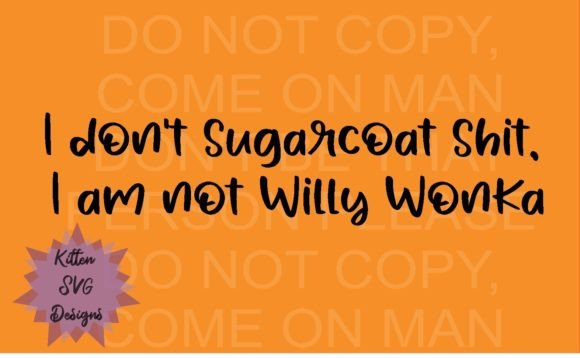
Don't Sugarcoat Shit
As a designer and embroidery product reviewer, I’ve seen thousands of machine embroidery designs. But few have the bold, unapologetic energy that "Don't Sugarcoat Shit" brings to the table. This design isn’t just a graphic—it’s a statement. Whether you're creating custom apparel, personalized gifts, or small business merchandise, this embroidery file has the potential to stand out, but it also comes with some important considerations.
The First Impression: Bold, Unfiltered, and Uncompromising
From the moment you open the SVG file, "Don't Sugarcoat Shit" demands attention. The visual personality is raw and direct, with a strong emphasis on typography that feels both rebellious and relatable. The layout is clean, with a central message that’s easy to read, but the design isn’t afraid to push boundaries. It’s perfect for projects that want to make a strong impression—whether that’s through a tote bag design, sweatshirt embroidery, or an embroidered patch.
The shape and theme are ideal for those who want to express frustration, resilience, or a sense of authenticity. It’s not a subtle design, but that’s part of its charm. It works best when paired with fabrics that can handle its intensity, like cotton, denim, or canvas. If you’re looking for something that screams “I’m not hiding my truth,” this design delivers.
Real-World Embroidery Performance
When I tested "Don't Sugarcoat Shit" on a sample sweatshirt, the results were impressive. The stitch density was well-balanced, allowing the text to pop without overwhelming the fabric. However, there are a few things to keep in mind. The design includes some fine details that could be lost on smaller hoop sizes or thin fabrics. If you're working on a baby onesie or a delicate top, you might need to adjust the design or simplify parts of it.
For custom apparel, this design shines. It’s great for tote bags, aprons, and even holiday gifts. But if you're planning to use it on a cap or a curved surface, you’ll need to ensure the design is properly adapted for that shape. The same goes for layered garments or items with stretchy fabric—make sure the stabilizer is up to the task.
On dark fabrics, the design looks sharp, but on light backgrounds, the contrast might be less dramatic. I recommend testing it in black and white mockups to see how it translates across different materials. Thread color choice is also important—opt for bold, high-contrast colors to make the message stand out.
Where to Use It (and Where to Be Careful)
"Don't Sugarcoat Shit" is a strong fit for handmade products, personalized gifts, and commercial embroidery projects. It works well as an embroidered patch, a tote bag design, or a custom sweatshirt. It’s also a good choice for craft businesses looking to add a unique touch to their Etsy listings or boutique products.
However, there are some limitations. On textured fabrics, the design might not look as crisp as on smooth materials. If you're using it on a baby item, check the stitch density to avoid any discomfort. Tiny lettering or detailed corners could be problematic on small hoop sizes, so always test on scrap fabric first.
This design isn’t ideal for items that will be washed frequently. The saturation of the stitches might fade over time, especially if the fabric isn’t treated properly. For commercial use, make sure you understand the licensing terms before selling finished products or digital files.
Design Considerations for Embroidery Professionals
If you're an embroidery designer or a small shop owner, here are some practical tips for working with "Don't Sugarcoat Shit":
- Test on scrap fabric: Always try the design on the actual material you plan to use. This helps identify any issues with stitch density or fabric compatibility.
- Check thread color contrast: Choose threads that provide maximum visibility, especially on light-colored fabrics.
- Review stitch density: Make sure the design isn’t too dense, which could cause puckering or distortion.
- Confirm hoop size: If the design is large, ensure your hoop can accommodate it without compromising quality.
- Inspect small details: Pay close attention to corners and edges to avoid misalignment or missing stitches.
- Use proper stabilizer: A good stabilizer will help maintain the integrity of the design, especially on stretchy or thin fabrics.
- Verify licensing: Before selling finished items or digital products, confirm the usage rights associated with the design.
This design is versatile enough for both personal and commercial projects, but it requires thoughtful application. It’s a great addition to your design assets if you're looking to create something bold and meaningful.
Final Thoughts: A Design That Speaks Volumes
"Don't Sugarcoat Shit" isn’t just another embroidery file—it’s a conversation starter. It has the potential to elevate your handmade products, add personality to custom apparel, and resonate with customers who value authenticity. But like any strong design, it needs to be handled with care.
Whether you're an Etsy seller, a craft business owner, or a hobbyist, this design offers a unique opportunity to express yourself through embroidery. Just remember to test it thoroughly, consider the fabric and project type, and always respect the design’s intended purpose.
For those looking to add a little edge to their work, "Don't Sugarcoat Shit" is a solid choice—but don’t expect it to be subtle. It’s meant to be seen, felt, and remembered.