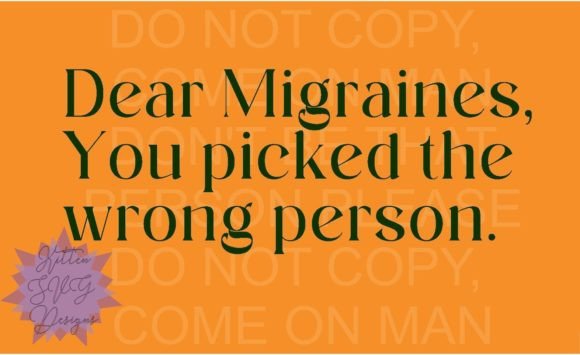
Dear Migraines
As a designer and embroidery product reviewer, I often find myself evaluating machine embroidery designs with a critical eye. When I came across the design titled Dear Migraines, I was immediately drawn to its bold message and unique visual identity. This is more than just an embroidery file—it’s a statement. But how does it hold up in real-world use? Let’s dive into what makes this design work and where it might fall short.
The First Impression
Dear Migraines carries a distinct mood. It’s raw, emotional, and unapologetically honest. The design features a stylized illustration that conveys the frustration and struggle of living with chronic pain. The layout is clean, with a central image that commands attention. The detail level is moderate—enough to be visually engaging but not so intricate that it becomes overwhelming. This makes it ideal for projects where the message needs to be clear and impactful.
It feels like a design meant for personal expression or a niche audience. If you’re looking to create a handmade product that speaks to those who live with chronic illness, this could be a strong fit. However, it’s not the kind of design that would appeal to a broad market. Its tone is specific, and that’s okay.
Real-Life Embroidery Use Cases
One of the first things I considered was how Dear Migraines would look on a custom embroidered tote bag. Tote bags are a popular item among small business owners and Etsy sellers, and this design could make a powerful statement. The size and layout of the design suggest it would work well as a front chest graphic on a sweatshirt or a large patch on a jacket.
I also thought about baby items. While the theme may not be suitable for every parent, there are those who appreciate a design that reflects their personal journey. A baby onesie or blanket with Dear Migraines could serve as a meaningful keepsake. However, it’s important to consider the appropriateness for the intended recipient.
For holiday gifts, this design could be used on aprons, tea towels, or pillow covers. It has a nostalgic, handcrafted feel that fits well with seasonal items. As a printable mockup, it could also be used to showcase a design concept to clients before committing to a full project.
Where to Be Careful
While Dear Migraines is visually compelling, it’s not without its challenges. The design includes areas with dense stitch coverage, which can be problematic on thin or stretchy fabrics. If you’re planning to use it on a t-shirt or a cap, be sure to test it on a scrap fabric first. The stitch density may cause puckering or distortion if not handled properly.
Small hoop sizes can also be an issue. If you’re working on a curved surface like a cap or a hat, the design may not fit comfortably in your hoop. This could lead to misalignment or uneven stitching. It’s worth checking the recommended hoop size before proceeding.
Another consideration is fabric texture. On dark or textured fabrics, the design may not show up as clearly. You’ll want to ensure that the thread colors contrast sufficiently with the background. For example, a black thread on a white fabric will look sharp, but on a dark fabric, you may need to adjust the color or add a stabilizer to enhance visibility.
Visual Appeal and Customer Perception
Dear Migraines has a strong visual presence that can elevate the value of a handmade product. When stitched correctly, it adds a professional touch to custom apparel or personalized gifts. However, the success of the design depends largely on execution. Poorly executed stitches can make the design look cheap or unrefined.
From a customer perspective, this design could generate interest and conversation. It’s not something you’d see on every tote bag or sweatshirt, which makes it stand out. That uniqueness can translate into higher engagement on Etsy or at craft fairs. But again, it’s important to target the right audience.
For small shop products, Dear Migraines could be a great addition to a collection focused on mental health, chronic illness awareness, or self-expression. It aligns well with the values of many handmade businesses that prioritize authenticity and storytelling.
Practical Designer Notes
If you’re planning to use Dear Migraines in your own projects, here are a few tips to keep in mind:
- Test the design on scrap fabric before committing to a final project.
- Check thread color contrast against different fabric backgrounds.
- Review the stitch density to ensure it works with your machine settings.
- Confirm the recommended hoop size and adjust as needed.
- Inspect small details like corners and lettering for clarity.
- Use proper stabilizer to prevent puckering on delicate or stretchy fabrics.
- Compare the design in black and white mockups to see how it translates.
- Ensure the design is suitable for both personal and commercial use.
- Verify licensing terms before selling finished products or digital files.
These steps will help you avoid common pitfalls and ensure that your final product looks polished and professional.
Final Thoughts
Dear Migraines is a design that resonates on a personal level. It’s not for everyone, but for those who connect with its message, it can be a powerful tool. Whether you’re creating a custom apparel piece, a personalized gift, or a small shop product, this design has the potential to make an impact.
As with any embroidery file, success depends on careful planning and execution. By taking the time to test, adjust, and refine, you can turn Dear Migraines into a standout piece that reflects your craftsmanship and creativity.